This article explains what's inside the Real Estate Report Card, walking through each section. It's written for loan officers who want guidance on discussing the forecasted appreciation for a particular area as well as the affordability, demographics and housing stats driving home values in a particular area. For instructions on building the report itself, see the paired step-by-step guide.
Navigating to the Real Estate Report Card
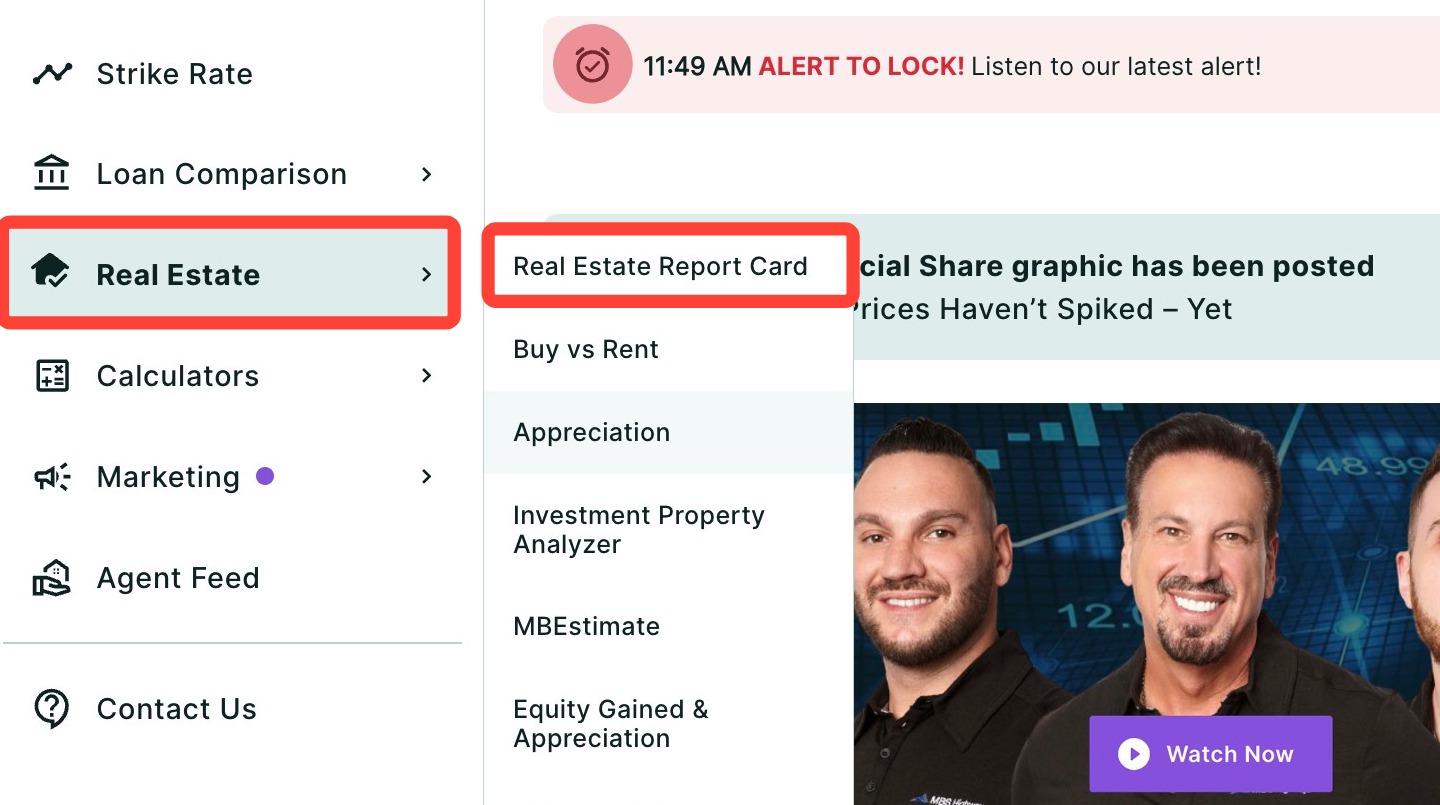
You can find your Real Estate Report Card within Client Manager as well as within the Real Estate tab in the left-hand navigation menu.
Navigating through the Client Manager
Client Manager allows you to create reports for your clients using previously saved loan and property details, saving you time when building new scenarios. To learn more, click here.
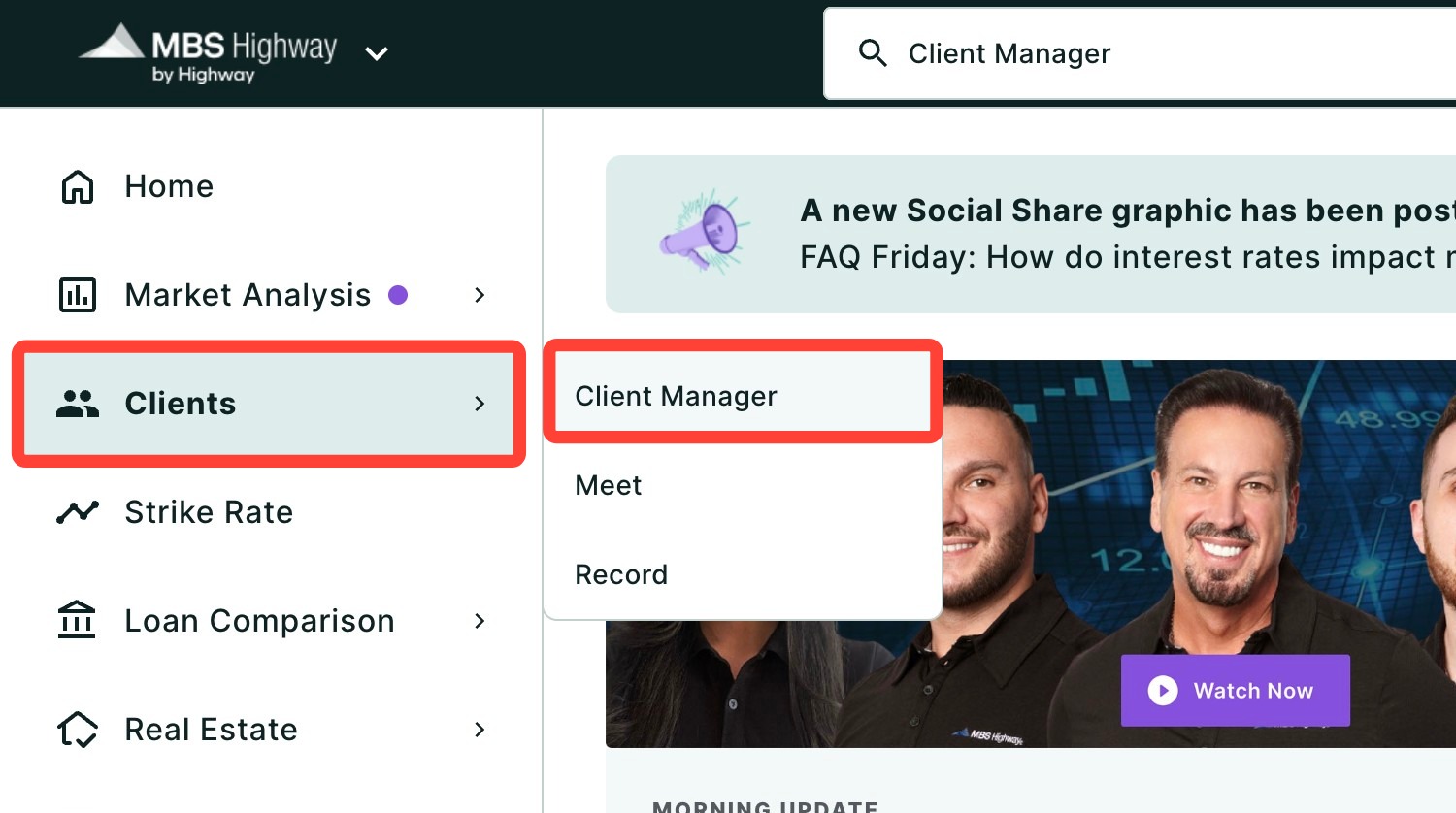
Navigating through the left-hand sidebar menu
To access the Appreciation report using the left-hand sidebar menu, click Real Estate, then click Real Estate Report Card.
|
💡 Helpful Tip: You can also search and favorite reports, tools, and calculators. Click here to learn how.
|
Report Header
The Real Estate Report Card header includes a customizable image, display address, and median home price. The image and display address can be changed by clicking Edit under Location.
With Clients
You can customize the image and display address to reflect a specific property, such as an open house or listing your client is considering. This helps personalize the report and connect the data to the property being reviewed.
Appreciation
Forecasted Appreciation: This chart shows the projected home value over the next five years. You can select which appreciation model the chart uses by clicking Edit under the Forecasted Appreciation option in the upper left corner of the page.
Historical Appreciation: This chart shows the average annual appreciation rate over the last 5, 10 and 63 years in the area.
With Clients
The Appreciation section can help clients visualize how home values have changed over time and how different appreciation models affect projected home values.
When reviewing this section with clients, you can:
Use the Forecasted Appreciation chart to show how home values may change over time based on the selected appreciation model.
Use the Historical Appreciation chart to provide context on how home values have changed in the area over longer time periods.
Compare different appreciation models to help clients understand how varying appreciation rates can affect projected home values.
This section can help support conversations about long-term homeownership and provide additional context when evaluating different areas.
Supply and Demographics
This section provides insight into housing supply, listing activity, and population trends in the selected area's county.
Homes Being Built: The estimated number of homes being built each year.
Active Listings: The total number of homes currently for sale, along with month-over-month and year-over-year changes, and the number of new listings in the past five days.
Demographics by Age: A breakdown of the population by age group to help identify key home buying demographics.
Homeowners & Renters: The percentage of homeowners, renters, and renters who can afford to purchase a home in the selected area.
|
Helpful Note: In some areas, the Active Listings section may not be displayed if complete listing data is unavailable. This ensures your report reflects the most accurate information possible.
|
With Clients
The Supply & Demographics section provides insight into housing supply, listing activity, and population trends in the selected area. Reviewing these indicators can help clients better understand current market conditions and long-term housing demand.
Key indicators to highlight include:
Balanced housing supply: Moderate construction and stable listing levels can help provide insight into overall market stability and supply conditions.
Active listing trends: Changes in listing activity can reflect shifts in market demand and overall market activity.
Population demographics: Population trends across key age groups can provide helpful context about current and future housing demand.
Homeownership potential: A higher percentage of renters who can afford to purchase may highlight potential opportunities for future homeownership in the area.
These factors can provide helpful context when discussing housing trends and homeownership opportunities in a specific area.
Affordability
This section shows the median household income in the area and the Affordability Index. This index shows how much home a family earning the median household income can afford in the area. A reading of 100 means that a household can afford 100% of the median home price if they put 20% down.
With Clients
The Affordability section helps provide context around local income levels and housing affordability in the selected area. You can use this section to show how home prices compare to the median household income and how affordability has changed over time.
Reviewing the Affordability Index with clients can help support conversations about current housing conditions and provide additional context when evaluating different areas or price ranges.
Need Help?
Have questions or want to learn more? Submit a ticket or call us today!
Related to